

The 4K DSLR Revolution Is Here: Shooting with the Panasonic GH4
From the HD Pro Guide Magazine archive: this article first appeared in HD Pro Guide Magazine, Vol. 2, No. 4 (2014). By Al Caudullo.
by Al Caudullo The challenge for new filmmakers is always the same. Create dazzling, spectacular, compelling content within a set of constraints or limited resources. It was hard enough with HD, then 3D jumped out at you, and now, we face a 4K reality. The eternal conundrum just grows bigger in size. People like to tell me that I think outside the box. I tell them they are wrong, and I just refuse to believe that there is a box. I believe I prove my point over the last seven years creating 3D content. My 3D has been licensed in over 20 territories around the world by millions of people. With my distributor, Torsten Hoffmann, of 3D Content Hub, I created my own niche market. I did it by not listening to what everyone else told me that I couldn't do. I just went out and did it. I pull together money from wherever I could and created the best content that I could create. According to Torsten Hoffmann, "Al Caudullo is one of the most successful independent 3D producers that I know." When 4K came on the scene, I realize the writing was on the wall, and so I jumped in with both feet. With my first three productions, I had moderate success. Then something came along that changed the game. Panasonic released the DMC-GH4. This amazing little camera not only recorded 4K but recorded it so well that in test after test it beat cameras 10 times as expensive.
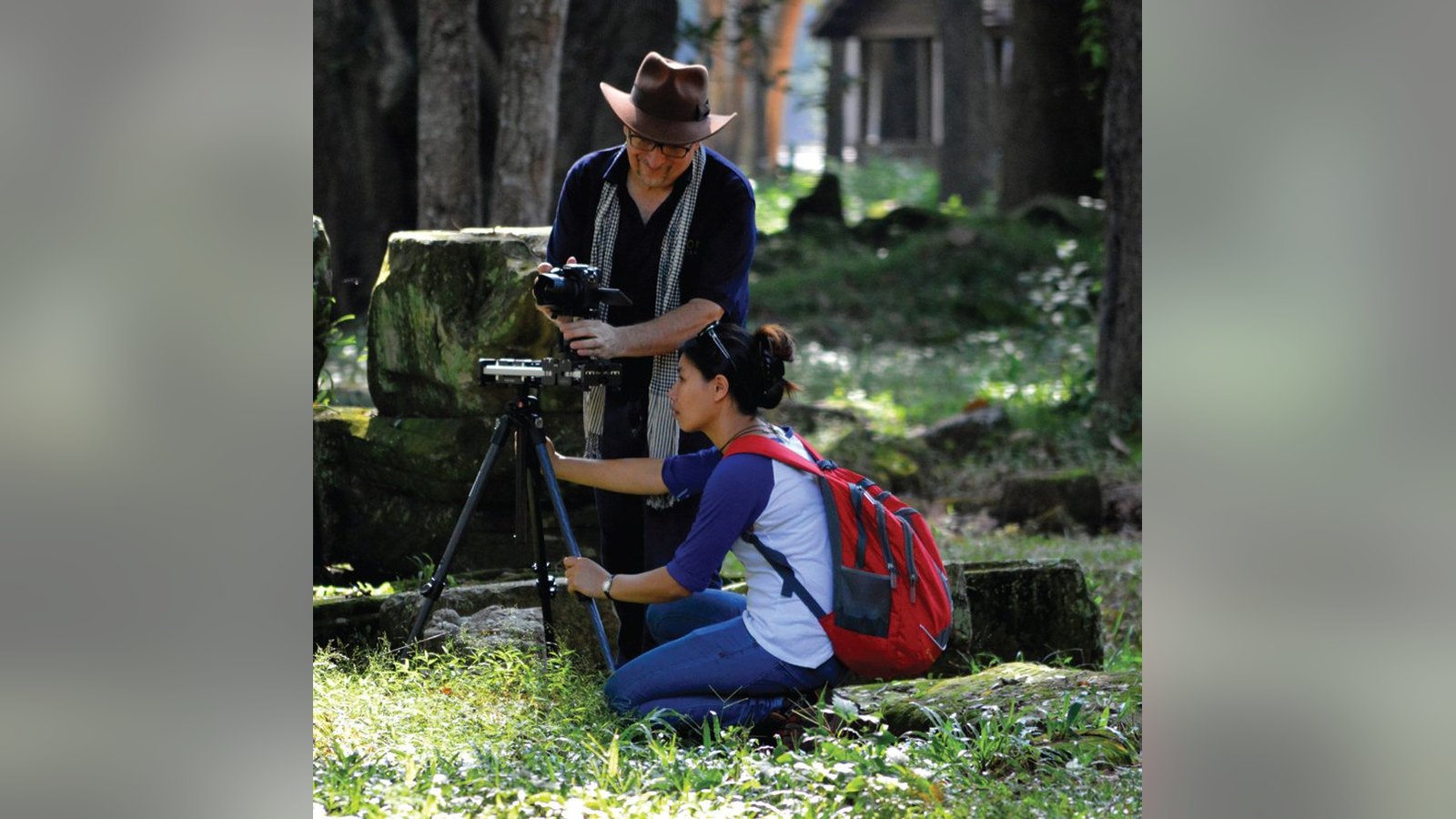
With that I decided to really put the camera to the ultimate test. The World Heritage Site of Angkor Cambodia features some of the most magnificent temples on the planet. Recently, archaeologist Damian Evans used a new type of laser radar called LiDAR. This amazing technology has now become portable enough to be attached to a helicopter and peer under the surface of the dense foliage of the jungle to reveal the full extent of how big the Ancient Megacity of Angkor really was. At its full glory Angkor was home to over 1 million inhabitants and was bigger in size than Los Angeles. Comparatively London at that same time was home to 50,000 people. Truly, Angkor was the largest pre-industrial city in the world. For many, this would be a daunting task. After all, the BBC, the History Channel and National Geographic have done recent stories on this fantastic site in HD. Not to mention a Hollywood Blockbuster based on a hugely popular, two-gun toting, female video game character! So when Torsten Hoffmann approached me about co-producing a one-hour documentary together, I thought what better subject matter than this to put the Panasonic GH4 to the ultimate test. The budget we agreed upon was an amount that anyone in Hollywood would fall apart in laughter and tears if you told them this is what they had to work with. To me it was sauce for the goose! But to do this, I needed more than just a camera. There were lenses to be chosen, not to mention an invaluable array of accessories. I chose the Lumix lenses, and they are fantastic quality for great value. The 7-12mm was amazing for revealing the scope of the temple structures. With the standard 12-35mm with a Tiffen Adjustable ND filter, as my mainstay. Throw in a 100-300mm for long shots or to compress distance when needed and my lens kit was complete.
The Angkor site contains over 100 temples so the kit needed to be lightweight and easy to carry. I chose a Manfrotto 190CXPRO3 carbon fiber tripod with a Manfrotto 561BHDV head. One of the most important elements to create professional grade content was the addition of my Edelkrone Slider Plus Pro. This amazing tool fits easily into a backpack and quickly attaches to your tripod to give you a fantastic slider shots.
Two other key pieces of equipment are my Edelkrone FocusOne focus puller and the PocketRods to attach them. Finally, the Edelkrone PocketShot for those places where a tripod won't work or wasn't allowed. Knowing that I needed aerials to really be able to show the scope of this awe-inspiring location, I booked a tourist helicopter. But with all that vibration how could I get good quality? The answer came in the form of an electronic gimbal. My budget would support the MoVI or even the DJI Ronin. I opted for a fantastic value from China, the CAME-TV 7500 gimbal. Coming preassembled and fully loaded with the necessary software and settings for almost out of the box use. Not to mention it was a third of the cost of the DJI offering. I did need to do some tweaking and with the help of my good friend at cheesycam.com, I was ready to go. Big thanks to Emm Cheesycam. There was one more piece to this puzzle. I needed certain accessories that would enable me to move the camera from one platform to another. For instance moving from a Manfrotto tripod head to a smaller Giotto MH-1000 head for certain shots, or moving to the Edelkrone PocketShot
Or pocketrods. the came-7500
gimbal was also in need of a quick release as well. I needed a common quick release platform.
The solution was to go with Manfrotto Quick Release Mounts and plates. The problem there was two-fold. One, over all weight. Second, expense and delivery time to Bangkok, where I was doing pre-production. The solution presented itself as a tool that many think is just for toys and doo-dads: 3D printing. Using my 3D printer, I had already designed, printed and sold the SuperHero 3D system for GoPro Hero cameras. So back to my favorite design tool, Tinkercad. Tinkercad is a free 3D print designer that works from your browser. Thingaverse is a website where designers can share 3D print designs. Scouring Thingaverse, I found the items that I needed. In some cases, I had to modify them to do what I wanted. Once done, I printed them and had quick release mounts, plates and even custom focus rings, zoom rings and lens cap clips. I even started working on a 3D printed cage for the GH4 but ran out of time before I could complete it. But, I had everything that I needed now to head out to the location. By the way, I did not have one failure or breakage of any 3D printed part. Time to take another look at how you view 3D printing.
The edit is still in progress but the initial trailer has already generated great interest at the upcoming MIPCOM at Palais des Festivals in Cannes, France. The feedback has been what you have been hearing about the Panasonic GH4, rave reviews all around. The inevitable conclusion is that this camera is a game changer for the indie market. With it you too can join the 4K DSLR revolution.
More from HD Pro Guide: get new production, broadcast and post stories every week with the free HD Pro Guide newsletter.
