

Continuing Education for Working Professionals: What Film School Offers Mid-Career
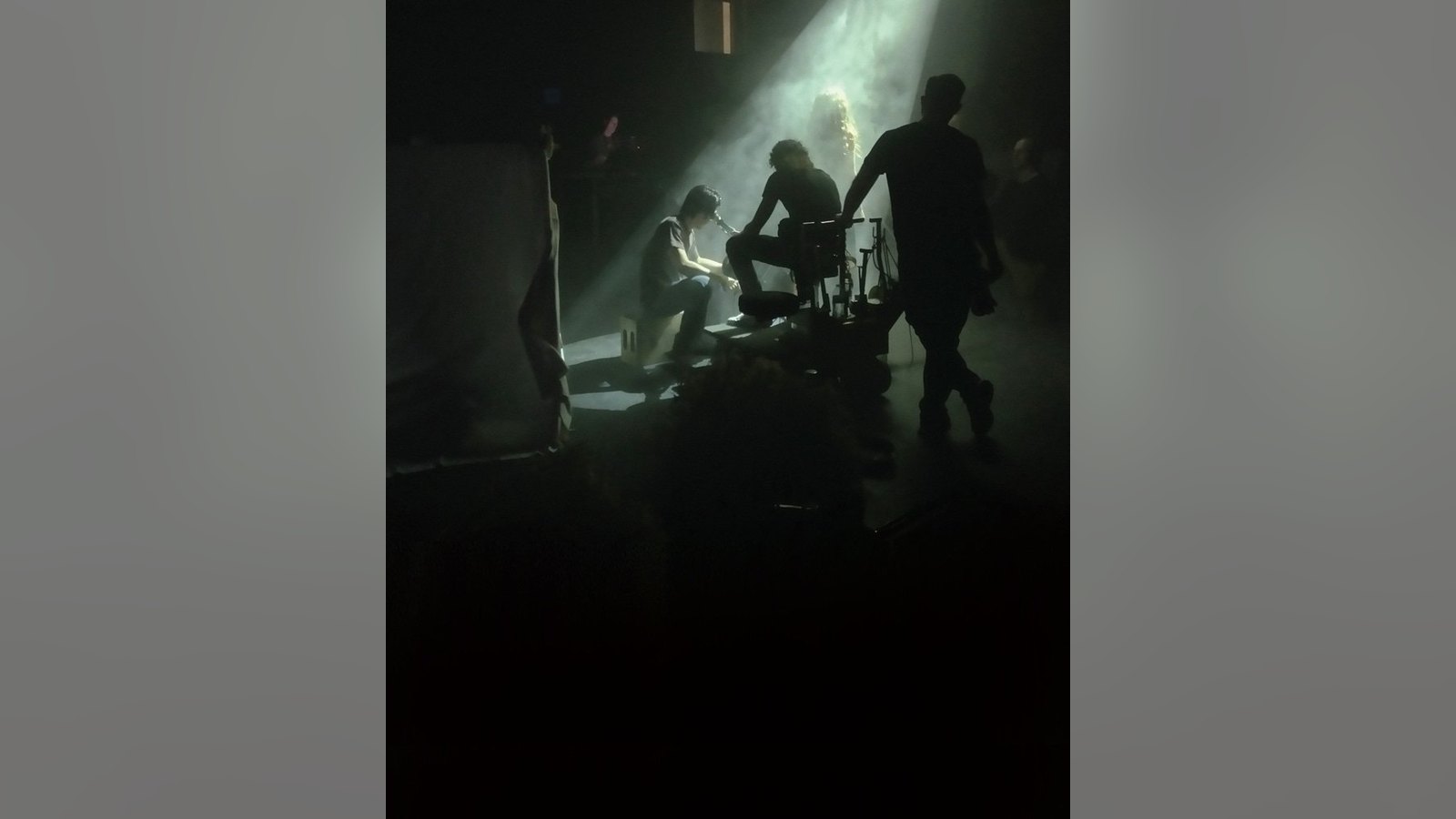
From the HD Pro Guide Magazine archive: this Q&A first appeared in HD Pro Guide Magazine, Vol. 2, No. 3 (2014). Interview by Jody Michelle Solis.
Is film school worth it for people who already work in the industry? HD Pro Guide Magazine asked the AFI Conservatory, the graduate film school in Los Angeles, how formal training compares with learning in the “school of hard knocks,” from hands-on production to networking and jobs after graduation.
How does film school give you an advantage over the school of hard knocks?
AFI Conservatory: A key part of any successful program is how much access it gives to industry professionals and future job opportunities, along with the quality of the education. Just as valuable is the chance to build career-long relationships with classmates and alumni. Those human connections can’t be measured, but they are at the heart of AFI. AFI alumni are loyal to one another at work because they trust their training: they know every AFI graduate, in every discipline, is a storyteller at heart who can adapt to the creative demands and production pressures of any kind of motion picture work.
Alumni gain the technical skills to support their creative abilities, so they can fill many roles across genres and platforms. Graduates enter the field in many capacities, and here’s where someone who didn’t go to film school might point out that a graduate got a similar entry-level job. But the film school graduate is more likely to rise in rank, or turn a part-time job into a full-time one, because of the experience and knowledge gained in school.
How does film school help students sharpen their skills?
AFI Conservatory: Students look for graduate schools where they can work with master mentors who have professional experience to share. At AFI, students (we call them Fellows) learn by doing in a hands-on, production-based, collaborative environment. In their first year they develop and produce three short films, the “Cycle” projects. In their second year they make a thesis project cleared for distribution and the festival circuit. Alongside production, Fellows study their craft in small classes. It’s an intense two-year program, and Fellows thrive in it.
Fellows are mentored in several ways. Every week, Narrative Workshop screens and analyzes first-year Cycle projects with peers and teachers in a very supportive setting, so Fellows see what works and learn from their own and others’ mistakes. Many alumni say they grew most as storytellers in these workshops. Each discipline also runs its own workshops with faculty such as editor Stan Salfas (Dawn of the Planet of the Apes, Chernobyl Diaries) and director Andy Wolk (Unforgettable, The Carrie Diaries, Defiance).
What filmmaking processes do students learn in formal education?
AFI Conservatory: Film school speeds up gaining the hands-on skills and work experience needed to succeed. At AFI you focus on one discipline and, by collaborating with other artists, learn what each role brings to the story. From day one, Fellows work like professionals in a team with one member from each discipline, together responsible for making a movie.
After a first month of boot camp, where Fellows shoot assigned scenes to explore point of view, collaborate on set and solve problems under pressure, they move into Cycle production. With real production schedules and budget limits, each team develops, produces and delivers three narrative films, with one Fellow each as cinematographer, director, editor, producer, production designer and screenwriter. It’s very much like a studio environment, but Cycle films aren’t screened outside AFI, so Fellows can take risks and learn from both successes and failures in a safe, mentored setting.
How does film school help with networking?
AFI Conservatory: Film schools are where many legends get their start, and many AFI Fellows have built lifelong working relationships. Bradley Buecker (Class of 2003), Dante Di Loreto (Class of 1991) and Brad Falchuk (Class of 1996) work together on American Horror Story, Glee and other productions. Dawn Prestwich and Nicole Yorkin (both Class of 1985) worked together on The Killing, FlashForward and more. They learned each other’s working styles on AFI Cycle and thesis productions and found their creative partners here. About 30% of Fellows are international, which brings a wide range of stories, voices and collaborators.
Fellows also connect with faculty who are working professionals and leaders in their fields. Our Harold Lloyd Master Seminar series has brought filmmakers such as Steve McQueen (12 Years a Slave), Brian Grazer (Rush) and Julie Delpy (Before Midnight) to screen their films and talk with Fellows. Faculty bring visiting filmmakers into the classroom to mentor Fellows on their projects, including Mindy Kaling (The Mindy Project), Michelle MacLaren (Game of Thrones, Breaking Bad) and alumni Autumn Durald (Class of 2009, Palo Alto) and Rachel Morrison (Class of 2006, Fruitvale Station). Being in Hollywood also helps us host international filmmakers such as Haifaa al-Mansour (Wadjda), Agnès Varda (Vagabond) and Hany Abu-Assad (Omar). AFI alumni work on most major Hollywood productions and know the skill level of AFI graduates, so AFI becomes a natural network in an industry that can otherwise seem impenetrable. The AFI family is one for life.
What jobs do new graduates typically get?
AFI Conservatory: It varies. AFI graduates have the skills to step in when other professionals need an assistant, so they can jump right in without extra training. Some build careers by winning major awards: Julian Higgins (Class of 2010) won a Student Academy Award for his thesis film Thief, went on to guest direct on House, M.D., and made festival shorts including Winter Light and Here and Now. Other alumni form creative teams, such as the makers of the independently released The Pretty One: Jenée LaMarque, Steven Berger, Polly Morgan and Anne Costa (all Class of 2010).
How many new graduates find meaningful work in the film industry?
AFI Conservatory: The vast majority work in the industry in some capacity and in their discipline. About 81% of graduates report working in entertainment. Production design alumna Kate Weddle (Class of 2013) joined the Art Directors Guild’s internship program as an art department assistant on Scandal. Editing alumna Lilly Urban (Class of 2013) divides her time between reality TV (Faking It), narrative (All Is Forgiven) and documentary features (Special Blood), after her team’s thesis film Young Americans took second place in the drama category of the 35th College Television Awards.
What is the biggest advantage of the film school experience?
AFI Conservatory: Artists gain a working knowledge of the history, craft and art of motion pictures. At AFI they develop narrative skills that aren’t tied to any platform or medium. Story is story is story. Storytelling is an art and a craft that is difficult at best and takes a lot of practice, and AFI gives filmmakers the tools to practice and become better storytellers.
This is a place for people who know what they are (cinematographers, directors, editors, producers, production designers and screenwriters) and want to get better at it. Film school is an investment and should be part of a career path. Our programs suit filmmakers who already have some industry experience, and we especially want to hear untold stories from unique voices. Our Fellows want to immerse themselves in an intense environment where story comes first and they make movies with the masters.
At the time of this interview, AFI reported 27 alumni up for 26 Primetime Emmy nominations across 18 shows. To learn more about AFI programs, visit AFI.edu.
More from HD Pro Guide: get new production, broadcast and post stories every week with the free HD Pro Guide newsletter.
