

Camera Operator Dave Kanehann, SOC on Multi-Camera Television and Camera-to-Post Workflow
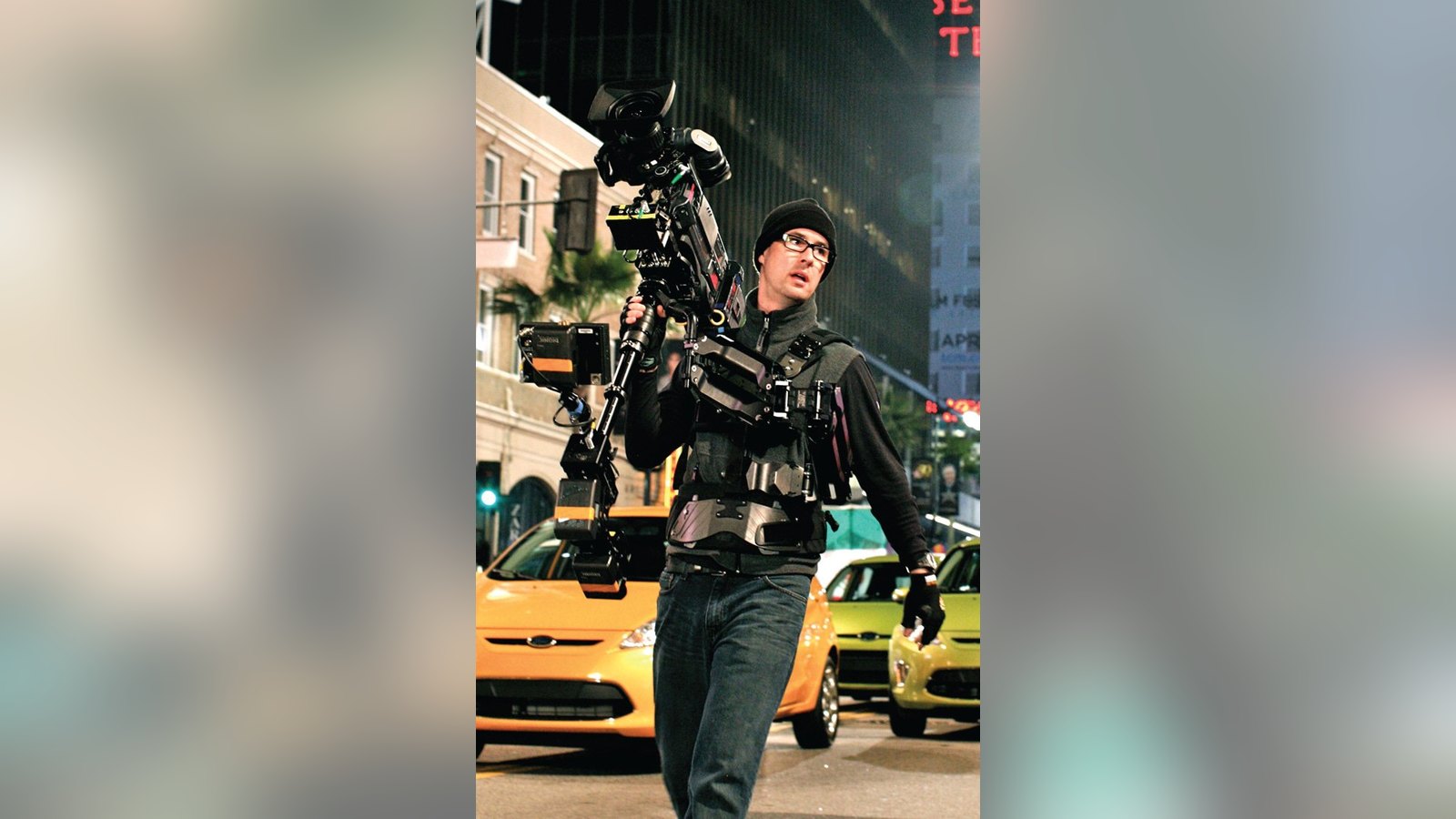
From the HD Pro Guide Magazine archive: this interview first appeared in HD Pro Guide Magazine, Vol. 2, No. 3 (2014). Interview by Wynona Luz.
Dave Kanehann, SOC, is a camera operator and Steadicam operator who specializes in HD and new media acquisition, on projects from reality shows and sitcoms to features and commercials. He has also worked as a technical supervisor, technical consultant and director of photography on independent projects, is a member of the Society of Camera Operators, the International Cinematographers Guild and the Steadicam Operators Association, and founded Cinekane Entertainment, Inc.
What brought you into the film and television industry?
Dave Kanehann, SOC: I started in high school with a side job doing production assistant work at a local production company: Lightstorm Entertainment, James Cameron’s company. It was an incredible place to start for anyone who wanted to work in the camera department, and that was my first big break. I spent many hours on test and experimental shoots, learning from incredible craftspeople in every department. During the Titanic years at Lightstorm I picked up anamorphic focus pulling and camera assistant skills. We were a bit ahead of the curve with HD and 24p, and that early experience helped me move up into camera operating.
My second big break came from working on sitcom pilots with director of photography Wayne Kennan, ASC. I learned a lot by watching Wayne and his crew, from the politics on set to lighting, camera choreography and blocking scenes, and I still use all of it today.
How would you define your role as a camera operator on So You Think You Can Dance?
Kanehann: Reality competition shows like So You Think You Can Dance, American Idol and America’s Got Talent have many different modules. They mix ENG-style field documentary, pre-taped location stage auditions and live studio performances and eliminations to make an episode. My role is outside the studio, on the documentary and reality side. With a sound mixer, I work directly with the producers, mainly lighting and shooting contestant interviews, and sometimes I travel to contestants’ homes to shoot backstory packages. It’s a wonderful show to be part of if you like to travel. The production team is amazing and the crew is cohesive, which matters a lot on traveling shows.
What cameras do you use?
Kanehann: Many formats make up the look of the show. On the documentary side we shoot structured interviews, including those with host Cat Deeley, on the Sony PDW-F800 XDCAM. For the studio-style traveling auditions we use Sony 1500 broadcast cameras fibered back to portable flypacks built and supplied by Pacifico Television Engineering for processing and recording the stage cameras. The live show from CBS is similar, minus the flypacks, with everything fibered to a control room. On the road we also carry half a dozen Sony Z1Us and Sony FS700s for slow motion and extra documentary footage. To the producers’ credit, they really support trying new camera technology to push the look of the show.
What is the biggest difference between shooting So You Think You Can Dance and Tabatha’s Salon Takeover?
Kanehann: Structure. So You Think You Can Dance is a reality competition with a formula that doesn’t change: audition, performance, judging and elimination. Tabatha’s Salon Takeover is a more typical “follow them around all day” reality show and very host-centric: each episode is a new salon in trouble, and Tabatha lends her expertise to help the business turn itself around.
What does the camera-to-post workflow look like in reality television?
Kanehann: It varies by sub-genre, and every show is different, but a basic reality TV workflow goes like this:
- The XDCAM disc or other media goes from the camera to production, where the timecoded content is digitized and logged.
- The content is transcribed, and producers and editors start assembling story beats from the transcripts and the logs made during shooting.
- Once there’s an assembly cut for the episode, the footage goes through color correction and the show’s specific LUT is applied.
- After picture lock, final color correction and audio sweetening, the show is delivered to the network for distribution.
What’s an interesting challenge you’ve solved on a shoot?
Kanehann: A few years ago I was Steadicam operator on a 3D shoot when the camera’s output failed, and the latency was unacceptable for framing a moving shot. I marked specific points along the two-minute move, memorized where I was in space and where the actors were in relation to the Steadicam, and did the shot completely blind. We did two takes, and the first one was perfect. Better to be lucky than good.
What advice do you have for breaking into the industry?
Kanehann: Be as specific as possible about your intentions. The clearer you are about what you want to do or achieve, the more others can help you get there. And don’t skip the process: the bumps and bruises along the way are part of learning. You can learn something from every situation and every job, no matter how big or small the gig.
More from HD Pro Guide: see more broadcast coverage, and get new stories every week with the free HD Pro Guide newsletter.
