

5 Fatal Filmmaker Mistakes to Avoid Before Distribution
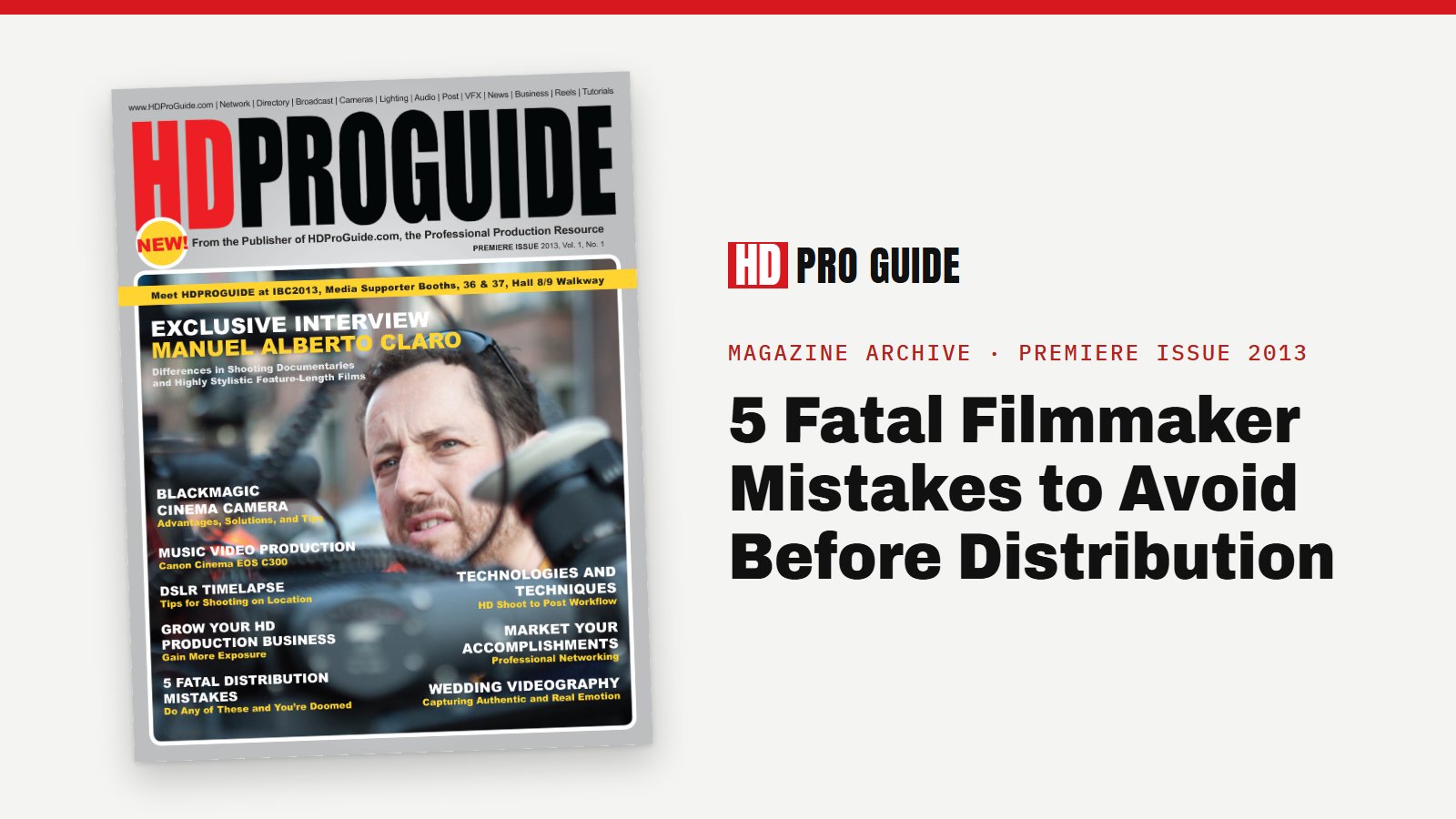
From the HD Pro Guide Magazine archive: this article first appeared in the premiere issue of HD Pro Guide Magazine, Vol. 1, No. 1 (2013). By Jerome Courshon.
Once your movie or documentary is finished, distribution is the next step for most of you. But it’s a minefield that has to be navigated carefully and strategically. However much you want to move on to your next film, now is not the time to be cavalier. Here are five very common, fatal mistakes producers and directors make every week when dealing with distributors, and that you must avoid. (Distributors absolutely hate that I’m telling you this.)
1. Don’t make worldwide rights deals
It saddens me every time a filmmaker tells me they’ve done this. Several times a month I hear about a producer or director who gave one company both domestic (U.S.) and international rights to their movie. Stop doing this. When you make this kind of deal, you’re doomed: you will never see any money beyond the advance, if you even got one.
Worldwide rights deals are an unscrupulous practice by many companies, because almost no one outside the studios, mini-majors and a few others distributes directly in both the domestic and international markets. They either distribute only domestically and farm your film out to someone else for foreign (taking a piece of that pie too), or the reverse. That eats into your revenue, and it makes it easier for a distributor to cross-collateralize, a fancy term for deducting losses anywhere in the world against profits, which ensures you’ll never see a dime.
The only exception is a studio or mini-major giving you a nice fat advance for the world, if you’re satisfied with that advance, because it’s likely the only money you’ll ever see from them.
2. Don’t make deals that never expire
Once in a while I hear about a filmmaker who made a deal that never expires. The contract word is “perpetuity.” Never make this kind of deal. Why would you give up the rights to your movie forever? Unless you’re being paid a very large amount up front, don’t do it.
Your movie or documentary is a real asset. A film’s worth is subjective to a large degree, but building what I call “pedigree” increases its value, and producers and directors who understand that can build films that pay dividends for the rest of their lives and longer. You’ve likely spent two years or more making your feature; don’t give that asset away forever.
Also beware of clauses that automatically renew the agreement unless you end it before the renewal date. I see them all the time. Strike them from your contracts. If you’re happy with the distributor at the end of the term, you can mutually agree to renew or negotiate a new contract. (An exception: a licensing deal with, say, HBO for 18 months, with an option to re-license for another 18 months by paying another fee. That’s fine, and it isn’t a perpetuity deal.)
3. Don’t give distributors free rein
Stop signing contracts that let distributors recoup unlimited expenses. I see this every week: a filmmaker thrilled to get a contract whose boilerplate lets the distributor recoup $50,000, $100,000 or $200,000 in expenses. If you’ve made an independent film without stars, no one is going to spend $50,000 or more marketing and distributing it. With stars, maybe, depending on the stars, the genre and the caliber of the distributor; a tiny distributor won’t take the risk of spending a lot.
So negotiate the boilerplate and remove high or unlimited recoupable expense clauses. Get “expense caps” into the contract. Every distributor knows what they are. It’s your job as a film businessperson to know this and negotiate it. Don’t count on a producer’s rep to tell you, and don’t assume your attorney will educate you. Good entertainment attorneys will help, but many don’t see education as part of their job.
An extreme example: I recently saw a contract in which a filmmaker not only agreed to $200,000 in recoupable expenses, but agreed that if the distributor’s sales didn’t reach $200,000, the filmmaker would pay the difference to the distributor. I’m not joking. Filmmakers aren’t idiots, but they agree to things like this all the time. Please stop.
4. Don’t marry a crook
Do your due diligence. Check out any distributor before you get “married” to them, and don’t let the thrill of an offer cloud your common sense. Look at films they’ve handled and contact those producers; most producers will do this as a professional courtesy.
Don’t bother asking the distributor for references, because they’ll only give you the good ones. Take a random sample of films that have been with the distributor for at least a year (check release dates on IMDb, IMDbPro or Amazon), and contact the producers of three of them. Ask not only about sales, but about revenue actually received, timely reports and so on. Most producers and directors skip this, and skipping it is playing Russian roulette with your movie.
5. Don’t hop into bed because someone says “I love you”
You’ve probably spent two years or more making your movie or documentary. You’re exhausted and just want the journey to be over, or at least to start enjoying the accolades. That’s the trap. A distributor calls, praises you and says your film is brilliant, and you fall in love and throw caution to the wind, dreaming of big paychecks and your next film. But you don’t really know anything about this distributor.
Don’t sign whatever is put in front of you. Do your due diligence, and just as important, moderate your enthusiasm until the distributor checks out and the contract is fully negotiated. I’ve lost count of the producers and directors who made bad deals because they finally had a suitor, and the rational part of their brain stopped working.
If you make a bad deal and get burned, the odds that you’ll ever make another movie drop by at least 80%, and the number of filmmakers who make a second feature is already staggeringly low. Educate yourself about what a good deal is and what a good contract is. They are not necessarily the same thing.
Final words
Build protections into any distribution contract, including a “safety valve” that lets you get your rights back without lawyering up if the distributor does a poor job. Most filmmakers don’t negotiate this or even know to. Too many think they don’t need to know any of this, or think they know the game when they don’t. Don’t let that destroy the film you’ve put so much heart, time and money into.
I know you love the creative side of filmmaking and would rather spend all your time there. But unless you make films purely as a hobby, this is a business, and thriving as a producer or director means learning and embracing everything that comes after you finish your movie.
Film producer and distribution expert Jerome Courshon has helped hundreds of filmmakers achieve distribution through his classes, speaking engagements and consultations, including his three-day program “The Secrets to Distribution.”
More from HD Pro Guide: get new production, broadcast and post stories every week with the free HD Pro Guide newsletter.
