

Jesus Culture’s “Unstoppable Love” Tour: Filming a Concert with 19 Blackmagic Cameras
From the HD Pro Guide Magazine archive: this article first appeared in HD Pro Guide Magazine, Vol. 2, No. 4 (2014).
There are concert videos showing a band banging out a few tunes and waving towards the audience. And then there are concert videos where the band and the audience come together and create a bigger experience. for these concerts, to do the event any justice you have to hit every angle of the band and the audience and capture the emotion from both sides.
Nathan Grubbs, a director and producer from California, was tasked with capturing such an emotional event. The band was “Jesus Culture” and the film “Unstoppable Love” was about the “Jesus Culture” community, its faith, the band’s message and the shared experience of everyone in the theater. Not an easy task for Nathan and his staff of both experienced operators and volunteers. But he chose 16 Blackmagic Cinema Cameras and three Pocket Cinema Cameras and jumped into capturing the moment.
“Jesus Culture” is more than a band though. It is also a global movement and church ministry. Beginning as a youth group out of the Bethel Church in California, the group has grown and now tours campuses, cities and countries around the world with their ministry. The band has become a top recording artist in the Christian music market, and their movement numbers in the tens of thousands.
With a worldwide audience, however, “Jesus Culture” is faced with how to constantly stay connected with members who cannot attend events in person. Their new album had just hit iTunes, and a concert video from a two day youth ministry conference in California was the perfect way to continue to spread their message and build their global community. Nathan Grubbs has a long history of working with groups such as “Jesus Culture” and had shot their conferences and concerts in the past. But with “Unstoppable Love,” he envisioned a bigger project.
“I wanted to get right down into every aspect of the performance and capture the emotions of the band and audience feeding off of each other. What I had in mind was definitely not a small task, and in the end we used 19 Blackmagic cameras as backbone of the whole shoot,” explained Nathan.
Shooting three concerts in a row at the Sacramento Memorial Auditorium in California, Nathan used 16 Blackmagic Cinema Camera EF models, as well as with three Pocket Cinema Cameras to capture the shows. Following the shows, he compiled the footage into a single concert video, which has been sold over iTunes and Blu Ray.
For the shoot, the cameras were broken into one group that was placed around “Jesus Culture” on stage and one group that was more mobile and circulated around the 5,000 people attending each show.
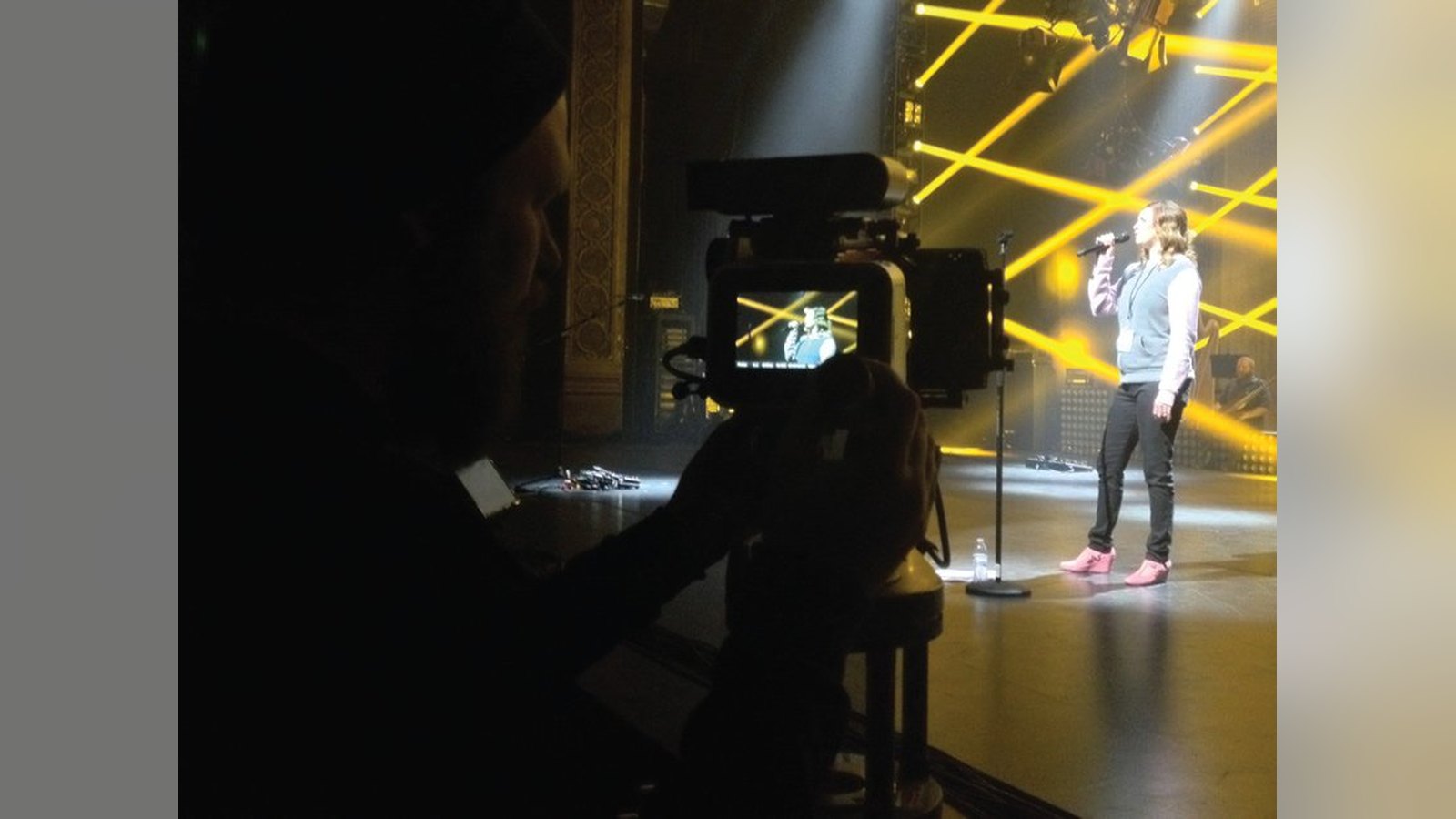
To achieve these setups, the Blackmagic Cinema Cameras were used on camera jibs in the back of the theater and on the floor, on fisher dollies, in front of the band on tracks in the stage pit, on roving MOVI rigs and the rest either handheld or used with SteadiCam rigs. The Pocket Cinema Cameras were used as handheld cameras on stage and in the audience, helping to get into extremely tight spots and capturing audience member’s reactions. “The images coming out of the Blackmagic cameras were amazing, and we were able to capture exactly what we needed over and over without any problems,” said Nathan. “With Blackmagic, I absolutely love the film look I get with the images, and I can capture a huge amount of detail shooting in ProRes. The cameras worked great in the low light situations as well as the harsh lighting of spotlights and effects. These cameras were awesome.
“Also, any cameras I used had to be affordable, as well as easy to use and get someone trained on. Most of the camera crew had not used the BMCC or were volunteers, and they picked up on the cameras right away. No other camera is as affordable as the Blackmagic cameras, while still giving me a film look,” continued Nathan.
Footage from the cameras was fed to the back of the theater and saved on drives for final editing the week following the concerts.
“We needed our cameras to capture quality images that we could easily work with and edit quickly afterwards. The video needed to look like a single, seamless event,” said Nathan. “The cameras’ ability to shoot in ProRes made this possible, and the workflow with them was fantastic. We didn’t have to waste any time transcoding, just captured all the feeds internally in each camera while monitoring via SDI in the director’s room, moved the ProRes files right into editing and got it done.”
More from HD Pro Guide: get new production, broadcast and post stories every week with the free HD Pro Guide newsletter.
