Richard Burki Expands the Possibilities of Immersive Audio With NUGEN Audio Halo Upmix
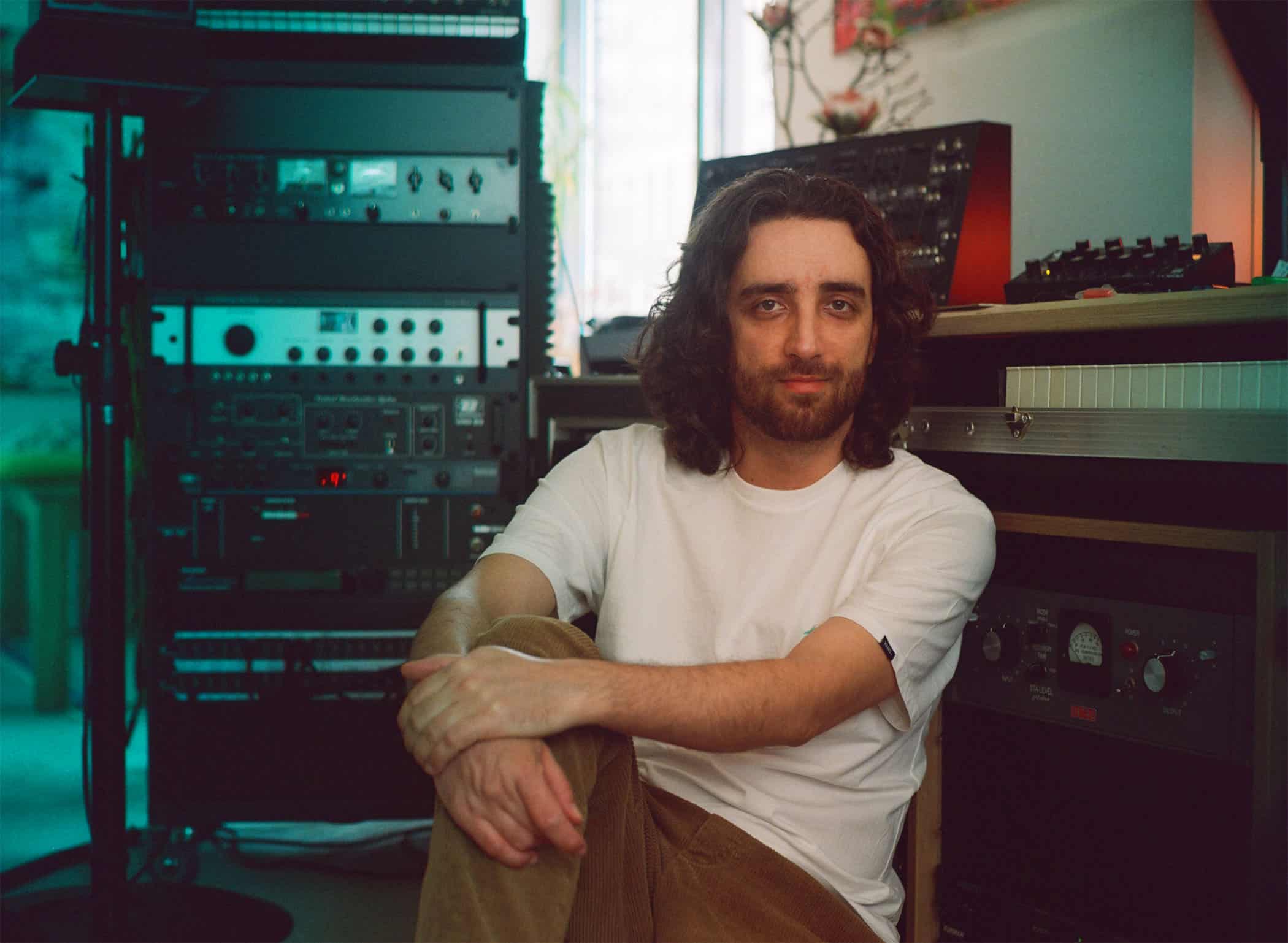
AMSTERDAM, NOVEMBER 19, 2026 ― As Founder and Creative Director of Future Phonic Studios, the Netherlands’ first Dolby Atmos music studio, Richard Burki has spent more than a decade pushing the boundaries of immersive and spatial audio. After beginning his career as a DJ and electronic music artist, Burki studied audio engineering, where he developed a fascination with three-dimensional (3D) sound that ultimately led him to establish the studio, building a career around helping artists and creators translate their work into compelling immersive experiences.
Today, he works across music, film, virtual and augmented reality, theater and experiential installations, collaborating with artists like Max Cooper, Drum & Lace, Bat for Lashes and Robot Koch. “I am very drawn to the concept of 3D audio,” Burki says. “I worked with many emerging technologies early on, and then I founded Future Phonic Studios, which focuses exclusively on exploring 3D sound productions. We’re always looking for interesting projects and creatives to partner with because immersive audio is still one of the least explored territories in audio.”
Across these projects, Burki relies on NUGEN Audio Halo Upmix to create expansive, natural-sounding immersive environments while ensuring seamless translation across playback formats. “Halo Upmix is essential to my workflow,” he explains. “There’s only a couple of plug-ins that I really couldn’t live without, and Halo Upmix is one of them. It bridges the gap between stereo sources and native 3D content.”
According to Burki, one of the biggest challenges in immersive production is translating audio that was not intended for spatial playback into 3D experiences. “A lot of what we struggle with is how to upmix materials into a 3D medium,” he says. “There are only a few ways you can really do that effectively without starting to damage or distort the image, either spatially or tonally, and Halo Upmix has become a critical solution for those applications.”
Burki routinely uses Halo Upmix on diffused audio elements, including ambient recordings, soundscapes and atmospheric musical textures. Rather than placing sounds at fixed locations, the plug-in helps him create immersive sound fields that envelop listeners and connect individual elements into a cohesive spatial environment. “With built-in spatial tools, you can define and position everything, but when you want to start creating things that are more like a cloud and tie everything together, Halo Upmix is really essential,” he adds. “It helps create a sound field that just wraps around a listener.”
The plug-in was implemented prominently on a variety of his immersive music projects, such as Max Cooper’s “Feeling is Structure.” Commissioned for a performance at London’s iconic Royal Albert Hall, the project incorporated immersive mixes to expand ambient and atmospheric elements. It was also utilized on Drum & Lace’s “Terra” EP to diffuse sounds, foley recordings and environmental ambiences into immersive soundscapes. Additionally, Burki’s work with Bat for Lashes and electronic composer Robot Koch benefited from Halo Upmix’s ability to create width and depth without introducing unwanted artifacts.
“So many of these projects rely on ambient textures, soundscapes, rain recordings and other diffused sounds,” says Burki. “Halo Upmix does this nice thing of spreading everything without making the sound fall apart. That’s been one of the main appeals for me.”
Before adopting Halo Upmix, Burki spent years experimenting with alternative approaches and competing solutions. After discovering NUGEN Audio, he found the plug-in streamlined complex processes that had previously required elaborate signal chains. “When I started using it, I realized it could have benefited so many situations where I’ve done ridiculous signal chains with 10 plug-ins to create something that still didn’t feel as good as what I get from Halo Upmix,” he recalls. “It’s just so easy.”
Burki also credits the plug-in’s intentional design for helping him work quickly while retaining access to powerful controls. “I find the layout very intuitive,” he says. “You can diffuse tracks, control the channels individually and fine-tune elements on the fly. There’s a lot of technical capability under the hood, and the way everything is laid out is very straightforward.”
Equally important is the ability of Halo Upmix to maintain consistency across multiple playback formats. Since Burki often begins projects in immersive environments before creating stereo deliverables, reliable translation between formats is essential. “Many of the artists I work with create from a 3D perspective first and then downmix later,” he explains. “Halo Upmix hasn’t let me down on any of the mixes in terms of how they translate across all these different formats. That’s been great. I’ve been trying to reduce the number of plug-ins in my folder, but NUGEN Audio is definitely staying there for the long run.”


