

Ron Garcia, ASC on Cameras, Reading a Script and Lighting Twin Peaks
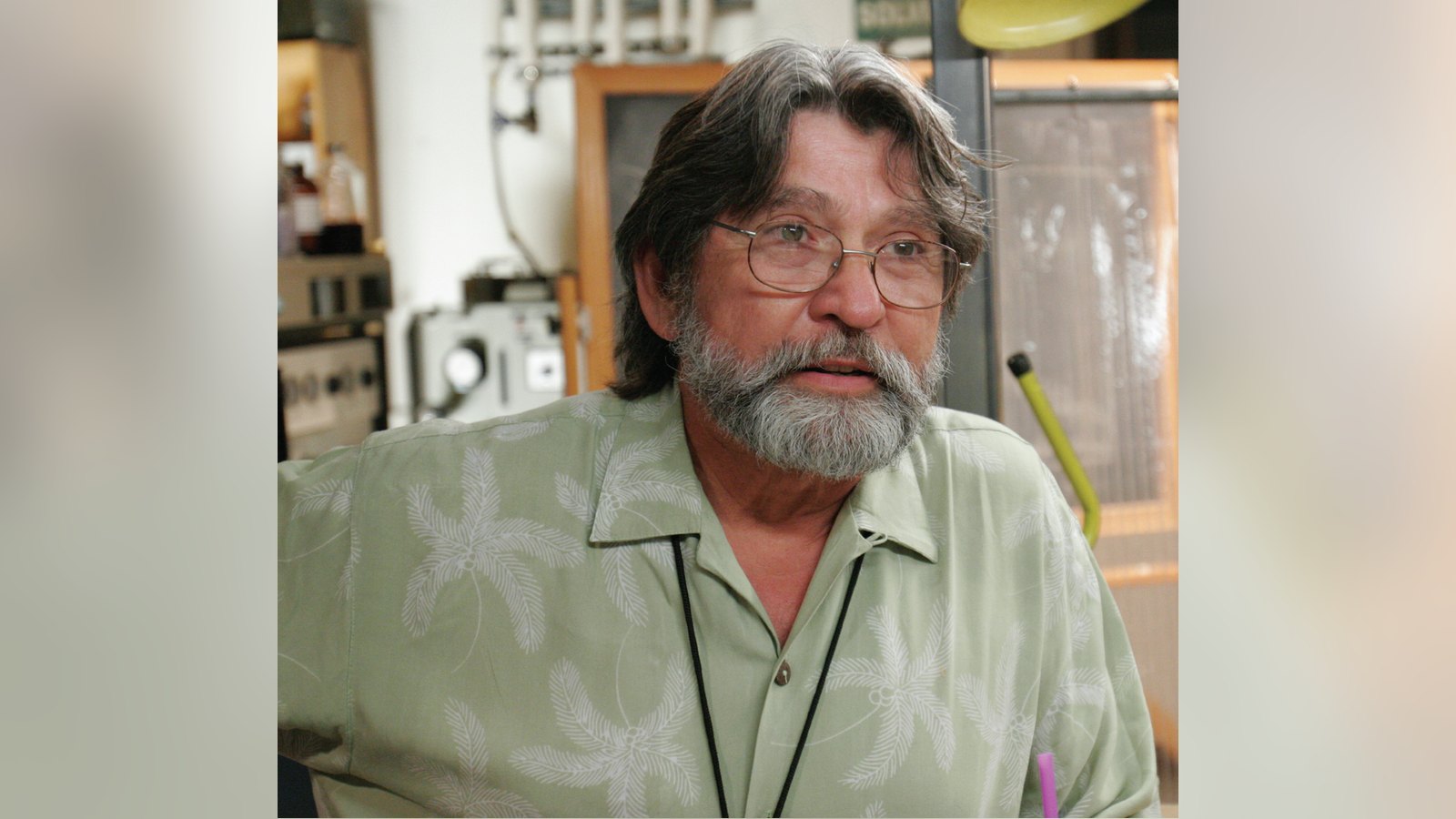
From the HD Pro Guide Magazine archive: this interview first appeared in HD Pro Guide Magazine, Vol. 2, No. 1 (NAB Show edition, 2014). Interview by Kelcie Des Jardins.
Ron Garcia, ASC, began his cinematography lessons as a child, studying light and color without knowing it while looking at the wild animal dioramas in the natural history museum. His first film opportunity came while he was working in the aerospace industry, attending Los Angeles’ Art Center College of Design at night and raising a family. He now has more than 68 titles to his name, including David Lynch’s feature Twin Peaks: Fire Walk With Me (1992) and television series such as Hawaii Five-0. In this interview, Garcia shares his favorite cameras, how he reads a script, and what he learned on set.
How did you get started in the film industry, and why cinematography?
Ron Garcia, ASC: As a fluke. While I was working at McDonald Aircraft, I met a guy who wanted me to help him make a film because I was attending Art Center at the time (1966). We made the film by trial and error. I had only owned a Kodak Brownie camera my parents bought me for my 12th birthday, and I shot very few pictures because I could not afford the film and processing. We went to the Birns & Sawyer camera rental house in Hollywood, and they showed us how to load the mags, read the meter and put the lens on. We shot for two days at an inboard motorboat race at Lake Havasu, came back to LA and figured out how to edit, attach the sound and make a final print. We shot with a 16mm Bolex and a handheld Arri S. We rented a 1,000mm lens because it looked cool on the camera.
Needless to say, I fell in love with the camera. I knew nothing about it and knew I needed to learn photography. The only way was to become a filmmaker and teach myself cinematography, which is not the fastest way to learn. It took a lot of hard work and time: producer, editor, art director, writer, then raising money, all to be able to hire myself out as a cinematographer and still feed my family. I took any job in the industry that paid the rent: building sets, background extra, editing, key grip, prop master, special effects, set dresser, art director, writer, producer, actor (once), sound effects editor, music editor. Anything that kept me in the game.
What are your favorite cameras?
Garcia: I used the Sony F35 shooting Numbers and Hawaii Five-0, and the ARRI Alexa shooting Rizzoli & Isles. I was also involved with the Alexa, RED Epic, Canon C300 and Sony F65 during the Producers Guild’s Image Control Assessment Series with my colleagues on the ASC Technical Committee.
All the HD, 2K and 4K cameras have their idiosyncrasies. They are tools with strengths and weaknesses to weigh against the demands of the production and the budget. At the time, the camera of choice for high-end motion pictures was the Sony F65, and I thought the Sony F55 would give the Alexa a run for its money in network television.
My favorite DSLR was the Canon 5D Mark II. On one episode of Hawaii Five-0 (“Ho’apono,” season one), I used two 5Ds exclusively for two days of a five-day shoot aboard the battleship USS Missouri, and it cut right in with the Sony F35. It was small and light enough to hand-hold for the low-angle shots walking through the ship and up and down its ladders. The crew was cut down to the camera team, one grip and one electric, because there was no room for more. I used the ship’s own lighting and added one 2×2 Kino Flo bank and a single 4-foot Kino Flo tube.
What do you look for when reading a script?
Garcia: I always read a script more than once, at different stages of production.
- Stage one: When my agent sets up a meeting with the producer, director and writer, I research the team on IMDb to see whether they know anyone I have worked with. If they do, I call those contacts. Then I watch their films so I can talk about their shows before they ask about mine.
- Stage two (before the interview): I look for the tone, what the script is trying to make you feel. Is it melancholy, scary, a quest, a day in the life? How does it affect me? I start thinking about camera movement, shot angles and lenses.
- Stage three (before the production meeting): I go over the script in detail, scene by scene, in shooting order as the 1st AD has broken it down. For exteriors: morning or afternoon, sun or overcast, where the sun will be, whether I need diffusion over the actors or start with backlight, what colors the actors will wear. For stage interiors: the size of the set, the height I have, room for lights outside the windows, enough color separation between skin tones and wardrobe. For location interiors: all of that, plus room for stands outside the windows and how many stories up we are.
- Stage four: After listening to the producer, director and production designer, I make my equipment lists, draw the sets and make a lighting and grip diagram, so the gaffer and key grip know what has to be set up and moved. I also break down camera and lens needs by day. If you show production you are prepared and have a plan, they rarely argue about the equipment.
How do you choose your projects?
Garcia: As a cinematographer, I have to get the job first. It’s very competitive. They choose me first, and then I decide whether I want it. Because I’ve directed three features and 17 network television episodes, produced five features, edited for eight years and art directed five films, I think of a project as a storyteller first: production value, budget, length, location. Then I decide whether it will be a hard grind with too much politics, or hard work that I’ll enjoy with the producer, director and production designer. Sometimes it’s both, and you are the only one who can make that decision.
On Twin Peaks: Fire Walk With Me, many scenes were shot outdoors or in very dark places. How did you light them?
Garcia: There was a night when David Lynch wanted the actors playing Laura and Bobby, meeting for a drug deal in the forest, to be lit only by their flashlights. David really likes dark scenes. I knew the film stock couldn’t lift the unlit side of their faces unless they kept shining the lights at each other, and I worried the scene would become a radio show.
I started taking away the 1,200-watt HMI PARs I had placed before nightfall. Each time I said I was ready, David said it was still too bright. I explained the film would get grainy without some ambient light in the background and foreground. It went on until I had one 1,200 HMI PAR bouncing into a pine branch for a little foreground fill, and David asked me, as an artist, “Where is that light coming from?” I paused for a frustrated minute and said, “The same place your music comes from!” He thought about it and let me keep the light. I still tell that story to my young camera assistants.
You also shot the Twin Peaks pilot. Do you work differently on television than on features?
Garcia: Yes. On film, I had to fight for ambient light in that forest because the picture would be projected in a dark theater. For broadcast, I would have let it go or used very little light. Today the best thing about shooting digital is the wide dynamic range of high-end cameras in the shadows.
What is the biggest challenge for a cinematographer today?
Garcia: Remembering that filmmaking is a collaboration across every department. The DP is no longer the sole creator of the photography. Digital opened the jar of “secret sauce” we used to have through lab work on color and density. Now everyone sees the picture in real time on set before we get to shape it. The good news is on-set LUTs for the director’s monitor and the studio’s dailies, and color standards such as ACES and the ASC CDL, which give the DP back a lot of influence over the final image.
Three pieces of advice for cinematographers starting out
- Dress for the interview. The first impression is how you walk in the door. In 44 years, no production team that interviewed me wore a suit, and I never did either, except when I was interviewed for membership in the ASC. A few casual, fashionable shirts make the team comfortable.
- Let your love of the craft show. Whatever position you choose, your work must stand out from the competition, and it’s your love of filmmaking that shines through.
- Take any job that keeps you in the game. People need to know you’re around, available and a hard worker. Keep your eyes open to everyone’s job; you might change direction, just like students change majors.
And as Alfred Hitchcock once told young filmmakers: “Stay out of jail!”
More from HD Pro Guide: get new production, broadcast and post stories every week with the free HD Pro Guide newsletter, and browse more live production and broadcast coverage.
