

Producing Wang Feng’s Concert at Beijing’s Bird’s Nest with Blackmagic Design
From the HD Pro Guide Magazine archive: this article first appeared in HD Pro Guide Magazine, Vol. 2, No. 5 (2014).
Chinese online video service LeTV live-streamed rock star Wang Feng’s concert at Beijing National Stadium, the Bird’s Nest, using a fiber-based live production system built largely on Blackmagic Design gear, with live color grading added on set.
The camera and switching setup
LeTV produced the event with ATEM 1 M/E Production Studio 4K switchers, ATEM 1 M/E Broadcast Panels, ATEM Studio Converters and ATEM Camera Converters, along with SmartView monitors, a HyperDeck Studio Pro, an HDLink Pro and DaVinci Resolve.
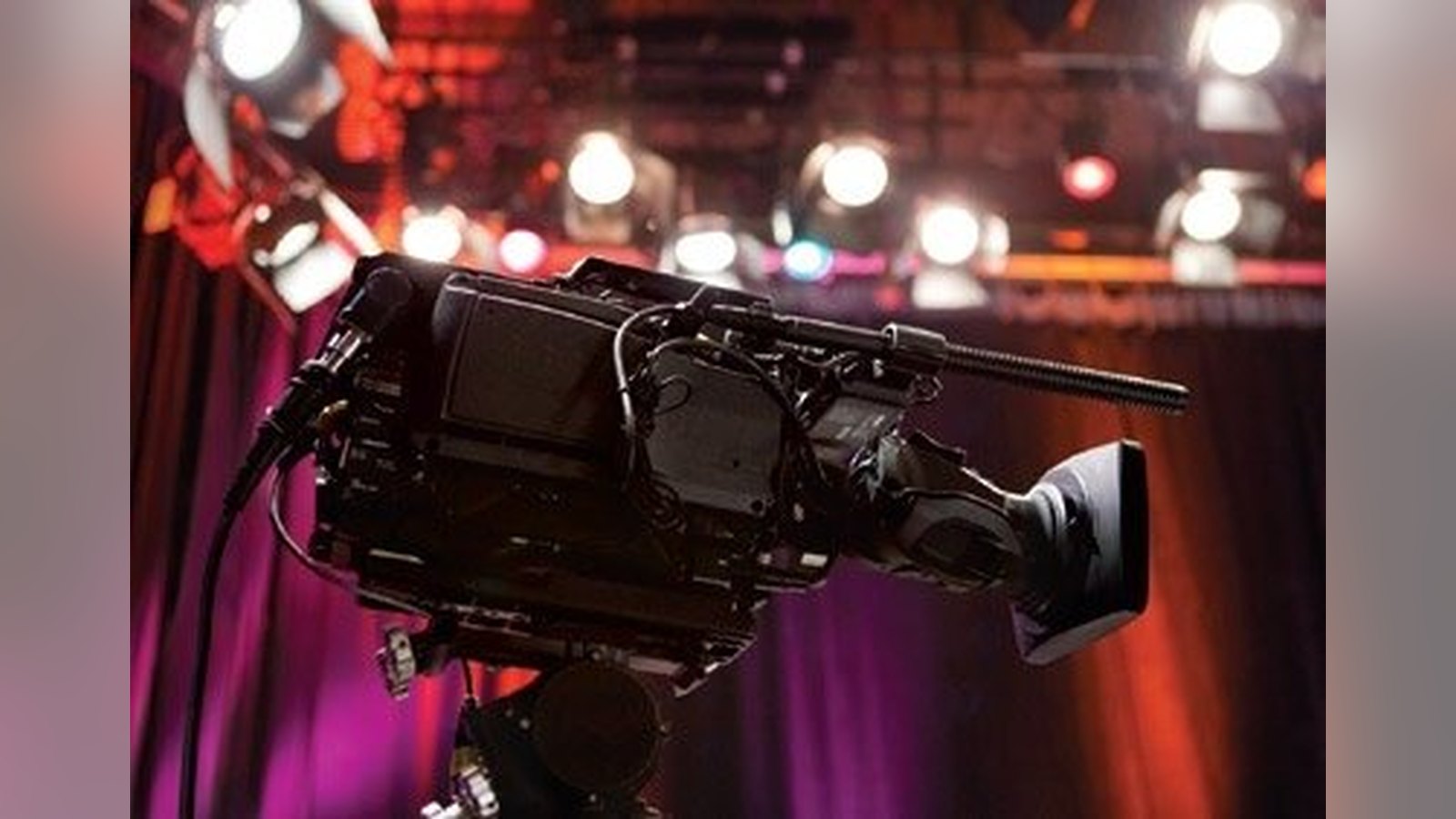
Ten digital film cameras with PL lenses covered the concert. Each camera had an ATEM Camera Converter that turned its SDI output into optical fiber. All camera feeds ran over fiber to a bank of ATEM Studio Converters, which turned them back into SDI for an ATEM 1 M/E Production Studio 4K switcher controlled from an ATEM 1 M/E Broadcast Panel.
“An optical fiber based live production system doesn’t need cumbersome hybrid cables, because one fiber is enough to carry video, talkback and tally between a camera and the switcher, and it can reach locations too far for coaxial cable,” said Li Mingyue, an engineer at Oxygentec, which designed the live production system and provided technical support. “More and more modern stadiums have fiber networks built in, which makes fiber cabling very convenient.”
Grading a concert live
Unlike a traditional live production, the team added on-set grading to suit the look of a concert. “The diverse light sources and colors on stage, and the high-contrast shots, go far beyond the Rec. 709 space used in traditional television,” said Hua Cheng, CEO of Homeboy Cine Studio, who handled on-set color management. “The cameras shot in S-Log3 for the widest possible color space and latitude, which required color management during the live production.”
“We built our Homeboy Color On Set live color system around the HDLink Pro LUT box and Pomfort’s LiveGrade software,” Hua explained. “The program feed went into the HDLink Pro, and from a laptop we loaded a film print emulation LUT we had built in DaVinci Resolve, adjusting it when needed. The graded program feed with a film look went out through the HDLink Pro’s loop-through output.”
“We could not only correct the image but add any creative look the director wanted in real time. When the singer performed a song about memory, we gradually faded the color away. That opens up new techniques for live production, especially for art performances like concerts.”
From switcher to stream
The graded program feed went to a second ATEM 1 M/E Production Studio 4K, which inserted the logo and song titles and mixed in audio from the external console using the switcher’s free software control panel and audio mixer. From there the finished feed went to LeTV’s streaming system for the online audience. Monitoring ran on two SmartView HD monitors and a SmartView Duo, and an HD master was recorded on a HyperDeck Studio Pro SSD recorder.
LeTV charged a “ticket” price of 30 yuan (about $4.90) and sold more than 75,000 paid views of the live webcast and full-length replay.
More from HD Pro Guide: see more live production stories, and get new ones every week with the free HD Pro Guide newsletter.
